
Exploring the Evolution of Indie Games in the Digital Age
This article examines the rise of indie games, their impact on the gaming industry, and the unique e
This article examines the rise of indie games, their impact on the gaming industry, and the unique e

This article examines the innovative trends and technologies that are set to redefine the landscape

Gaming has undergone a remarkable transformation over the centuries, evolving from traditional pastimes into a multi-faceted digital landscape that engages millions around the world. This evolution not only reflects changes in technology but also shifts in cultural attitudes towards play, competition, and social interaction. By examining the various forms of gaming—ranging from board games and card games to video games and mobile applications—we can appreciate how this pastime has developed and its profound impact on society.
Board games have long been a cornerstone of human interaction, offering entertainment and fostering relationships. Classics such as Chess, Monopoly, and Scrabble have become cultural icons, each representing unique gameplay mechanics and strategic depth. Chess, often hailed as the ultimate game of strategy, has captivated players for centuries. It requires critical thinking, foresight, and patience, making it not just a game but a cerebral exercise. Players engage in a mental duel, anticipating moves and formulating counter-strategies, which cultivates analytical skills that extend beyond the game itself.
Monopoly, with its focus on property management and financial strategy, invites players into a world of negotiation and competition. The thrill of buying properties, building houses, and bankrupting opponents brings both excitement and a lesson in economic principles. Scrabble adds another dimension, challenging players to construct words from a limited set of letters. This game enhances vocabulary and promotes creative thinking, as players search for the best combinations to maximize their scores. The social interactions facilitated by these games often lead to memorable moments and a sense of community.
Card games represent another significant aspect of gaming culture, offering diverse styles of play. Games like Poker and Bridge require not only skill but also psychological acuity. Poker, with its blend of chance and strategy, has evolved into a global phenomenon. Players must read their opponents, bluff, and calculate odds, making each hand a test of mental fortitude. Bridge, on the other hand, emphasizes teamwork and communication, as players work closely with partners to achieve victory. These games not only entertain but also build social connections, allowing players to engage in friendly competition.
The appeal of puzzle games cannot be overlooked in the evolution of gaming. Traditional jigsaw puzzles encourage patience and spatial reasoning, inviting players to piece together images while honing their cognitive abilities. Digital puzzle games like Sudoku and crosswords have also gained immense popularity, engaging players in brain-teasing challenges that stimulate logical thinking. The advent of mobile puzzle games like Candy Crush has made these challenges accessible to a wider audience, captivating players with vibrant graphics and addictive mechanics. These games encourage players to think creatively and solve problems, making them an integral part of the gaming landscape.
The shift to video games marked a pivotal moment in the history of gaming. The immersive experiences offered by action-adventure games like The Legend of Zelda and narrative-driven titles such as Final Fantasy have redefined how players engage with stories. In these expansive worlds, players not only complete quests but also become part of rich narratives that evoke emotional connections. The freedom to explore, make choices, and develop characters fosters creativity and critical thinking, inviting players to engage in storytelling on a personal level.
First-Person Shooters (FPS) like Call of Duty and Counter-Strike have revolutionized competitive gaming, offering fast-paced action and intense multiplayer experiences. Players must think quickly, strategize, and work as a team to achieve objectives, cultivating skills that are valuable in real-life situations. The rise of eSports has further solidified the importance of these games in contemporary culture, with professional players competing on global stages and drawing massive audiences. This phenomenon highlights the evolution of gaming from a casual pastime to a respected form of competition and entertainment.
Strategy games such as Civilization and StarCraft provide a different kind of challenge, requiring players to plan and execute complex strategies over extended periods. These games encourage long-term thinking, resource management, and adaptability, making them intellectually stimulating. Players must analyze their surroundings, anticipate opponents’ actions, and make calculated decisions to succeed. The complexity and depth of these games not only engage players but also promote critical thinking and problem-solving skills.
Simulation games, including The Sims and SimCity, allow players to create and manage their own virtual worlds. These games foster creativity by providing players with the tools to design environments and influence the lives of characters. The interactive nature of simulation games invites experimentation, as players can explore different scenarios and outcomes without real-world consequences. This freedom encourages imaginative thinking and enhances players’ ability to navigate complex social dynamics, offering insights into human behavior and relationships.
The rise of mobile gaming has made gaming even more accessible, introducing new genres and styles that cater to diverse audiences. Titles like Among Us and Clash of Clans have captured the attention of players worldwide, offering quick, engaging gameplay that can be enjoyed anytime and anywhere. Among Us, in particular, emphasizes social deduction and teamwork, as players must work together to identify the imposter among them. This blend of strategy and social interaction showcases the potential for mobile games to foster connections and enhance cognitive skills.
Casual games like Candy Crush Saga and Angry Birds have become staples in the gaming world, attracting players of all ages. These games are designed for easy accessibility, allowing players to engage in short, satisfying gameplay sessions. The simple mechanics often mask deeper strategic elements, encouraging players to think critically about their moves while providing a fun and relaxing experience. The widespread appeal of casual games highlights the importance of inclusivity in gaming, as they invite a broad audience to experience the joys of play.
Party games, such as Trivia Pursuit and Jackbox Party Packs, facilitate social interaction and create memorable experiences among friends and family. These games challenge players’ knowledge and creativity while fostering lively discussions and laughter. The competitive nature of party games adds excitement, encouraging friendly rivalry and collaboration. In an age where social connections are increasingly virtual, these games provide an opportunity for meaningful interactions and shared experiences.
Tabletop role-playing games like Dungeons & Dragons invite players into collaborative storytelling adventures. Players create characters and embark on epic quests, navigating challenges and forging alliances along the way. This imaginative play fosters creativity and critical thinking, as players must adapt their strategies and respond to unexpected developments. The social aspect of tabletop RPGs enhances communication and teamwork, creating a sense of community among players who share a passion for storytelling.
In summary, the evolution of gaming reflects broader changes in technology and culture, transforming play from traditional pastimes into a dynamic and multifaceted digital landscape. From board games and card games to video games and mobile applications, each genre offers unique opportunities for creativity, critical thinking, and social interaction. As we continue to explore the diverse world of gaming, we celebrate its ability to entertain, educate, and connect individuals across the globe, ensuring that games will remain a vital part of our culture for generations to come.

This article examines the development and future of gaming controllers, focusing on how innovations

Explore the intricate world of game design, focusing on the principles and elements that create enga
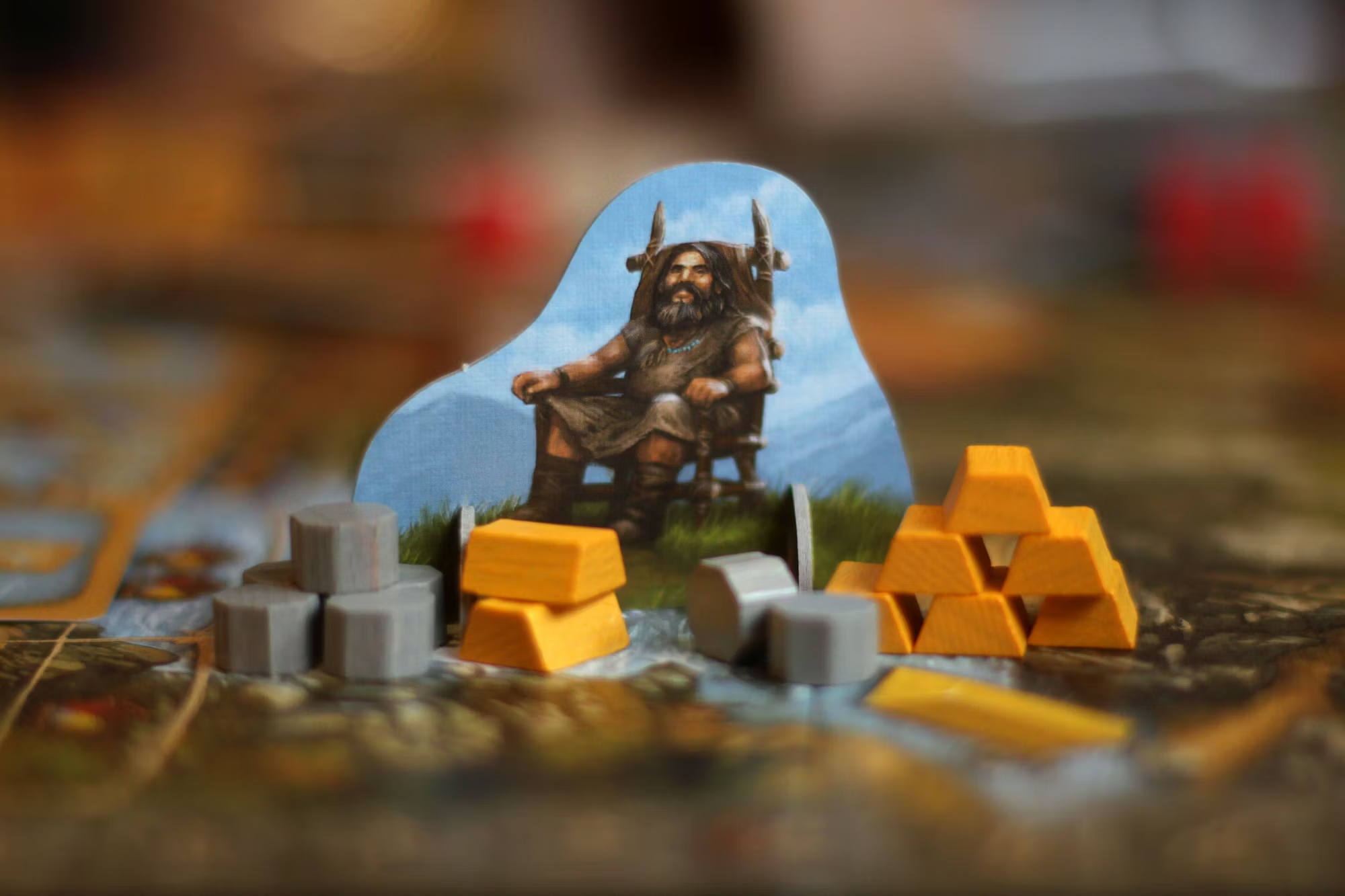
Open-world games have revolutionized the landscape of video gaming, offering players expansive environments to explore and a sense of freedom that was previously unimaginable. From the early experiments in the genre to today’s richly detailed worlds, the evolution of open-world gaming reflects changes in technology, player expectations, and design philosophies. This article explores the journey of open-world games, their influence on the gaming industry, and what the future may hold.
The Genesis of Open-World Gaming
The concept of open-world gaming can be traced back to the late 1970s and early 1980s, with titles such as “Adventure” on the Atari 2600 and “Zork” on early home computers. While these games did not offer the vast, immersive environments we see today, they introduced players to the idea of exploration and interaction within a virtual space. Players could navigate non-linear paths, making choices that affected their experiences.
The real turning point came in the late 1980s and early 1990s, with games like “The Legend of Zelda” and “Ultima VI: The False Prophet.” These titles featured more expansive worlds and encouraged exploration, allowing players to interact with their environments in meaningful ways. The Zelda series, in particular, showcased how an open-world structure could enhance storytelling by allowing players to discover secrets and solve puzzles at their own pace.
The Rise of 3D Open-World Games
As technology advanced, so did the potential for open-world design. The transition to 3D gaming in the mid-1990s opened up new possibilities for developers. Titles like “Doom” and “Quake” set the stage for immersive environments, but it was “Grand Theft Auto III” in 2001 that truly revolutionized the genre. This game provided players with a sprawling city to explore, complete with dynamic NPCs and a wide array of activities. It introduced the concept of a living, breathing world where player choices had consequences, and the notion of emergent gameplay became central to the experience.
Following the success of GTA III, more developers began to embrace the open-world format. Games like “Elder Scrolls III: Morrowind” and “The Legend of Zelda: Breath of the Wild” expanded on the formula, offering vast, interconnected worlds that encouraged exploration and player agency. These games not only prioritized player freedom but also integrated rich storytelling, lore, and character development into their expansive narratives.
The Impact on Game Design
The rise of open-world gaming has fundamentally changed how games are designed. Developers now prioritize player freedom, allowing individuals to approach objectives in a variety of ways. This shift has led to the concept of sandbox design, where players can engage with the world at their own pace, taking on quests and challenges in a non-linear fashion.
In addition to freedom, open-world games have placed a greater emphasis on immersion. Developers strive to create detailed, believable environments that draw players in. Advances in graphics and sound design have contributed to this goal, enabling the creation of stunning landscapes and realistic NPC interactions. Games like “Red Dead Redemption 2” and “Cyberpunk 2077” exemplify this focus on immersion, with intricately crafted worlds that offer a multitude of activities and narrative depth.
The Role of Narrative in Open-World Games
While open-world games excel in providing freedom, narrative remains a critical component of player engagement. Many modern titles integrate deep storytelling with their expansive worlds, creating a cohesive experience that captivates players. Games like “The Witcher 3: Wild Hunt” combine rich lore and character development with an open-world structure, allowing players to impact the story through their choices.
The use of branching narratives has become increasingly popular, offering players the opportunity to shape their destinies. The choices players make can influence character relationships, quest outcomes, and even the game’s ending. This interactivity fosters a sense of investment in the story and encourages players to replay the game to explore different paths and outcomes.
Challenges and Criticisms
Despite the successes of open-world games, they are not without their challenges. One of the primary criticisms is the potential for overwhelming players with too many choices and activities. Some players may feel lost or uncertain about what to pursue, leading to frustration rather than enjoyment. Developers are continually seeking ways to balance freedom with guidance, providing players with tools to navigate vast worlds without feeling overwhelmed.
Additionally, open-world games often face scrutiny regarding the quality of their content. While players appreciate the sheer volume of activities available, some argue that quantity can come at the expense of quality. Critics have pointed out that side quests and activities may lack depth or originality, diluting the overall experience. Developers are increasingly aware of this challenge and are striving to create engaging, meaningful content that enhances the open-world experience.
The Future of Open-World Gaming
Looking ahead, the future of open-world gaming appears promising. As technology continues to advance, developers will have more tools at their disposal to create immersive experiences. The rise of artificial intelligence and procedural generation holds potential for creating ever-changing worlds that adapt to player behavior, enhancing the sense of realism and immersion.
Furthermore, the integration of virtual reality (VR) and augmented reality (AR) could redefine how players interact with open-world games. Imagine exploring a vast fantasy realm through VR, where every detail is magnified, and every choice feels consequential. The possibilities for innovation are vast, and the future of open-world gaming is likely to be shaped by these emerging technologies.
Conclusion
The evolution of open-world games has fundamentally transformed the gaming landscape, providing players with unparalleled freedom and immersion. From early experiments in non-linear gameplay to today’s intricately crafted worlds, open-world gaming has influenced design, storytelling, and player engagement across the industry. As technology continues to advance and player expectations evolve, the future of open-world games holds exciting potential, promising to deliver even more captivating experiences for gamers around the globe.

This article explores the rise of esports, examining its history, the growth of competitive gaming,

This article examines the evolution of mobile gaming, its impact on the industry, and the future pos

Narrative design has emerged as a vital component of video game development, influencing how stories are told and experienced within interactive mediums. As games evolve from simple mechanics to intricate narratives, understanding the impact of narrative design becomes essential for both developers and players. This article explores the evolution of narrative design in video games, examines the techniques employed by designers, and highlights the emotional connections forged between players and stories.
The Evolution of Narrative Design
The journey of narrative design in video games began with straightforward plots and text-based adventures. Early games, like Zork and Adventure, relied on simple storylines that guided players through linear paths. As technology advanced, so did the complexity of narratives. The introduction of graphical interfaces allowed developers to create more immersive worlds and characters, paving the way for richer storytelling.
In the 1990s, the rise of role-playing games (RPGs) such as Final Fantasy and Chrono Trigger showcased how narrative could intertwine with gameplay. These games introduced players to intricate plots, character development, and branching storylines, allowing for varied player choices that impacted the outcome. This era marked a turning point where narratives became integral to the gaming experience, rather than mere backdrops for action.
Techniques in Narrative Design
Today, narrative design encompasses a wide range of techniques that enhance storytelling within games. One prominent technique is environmental storytelling, where the game world itself conveys narrative elements. Developers craft environments filled with details, such as remnants of past events, visual cues, and hidden lore, inviting players to piece together the story through exploration. This approach encourages immersion, as players actively engage with the world to uncover its secrets.
Another technique is character-driven narratives, which focus on deep character development and relationships. Games like The Last of Us and Life is Strange excel in this area, drawing players into the emotional journeys of their characters. By allowing players to make choices that influence character relationships, these games foster a sense of agency, making the narrative feel personal and impactful.
Branching narratives are also a hallmark of modern narrative design. This technique provides players with choices that affect the storyline, leading to multiple endings and varied experiences. Games like Detroit: Become Human and Mass Effect exemplify this approach, offering players the ability to shape the narrative based on their decisions. Such choices create a sense of investment, as players witness the consequences of their actions unfold within the story.
The Emotional Connection
At the heart of narrative design is the emotional connection it fosters between players and the story. A well-crafted narrative can evoke a range of emotions, from joy and excitement to sadness and fear. By creating relatable characters and compelling plots, developers invite players to invest emotionally in the journey.
Games like Celeste demonstrate the power of narrative to address real-life themes, such as mental health and perseverance. The protagonist’s struggles mirror those of many players, fostering empathy and understanding. When players resonate with a character’s journey, it deepens their engagement, making the experience more memorable.
Moreover, narrative design can serve as a means of escapism. Players often turn to games to immerse themselves in fantastical worlds, and a captivating narrative enhances this experience. Through well-told stories, players can momentarily step away from their reality, experiencing adventures and emotions that resonate on a personal level.
The Future of Narrative Design
As technology continues to advance, the future of narrative design in video games looks promising. The rise of artificial intelligence (AI) offers new possibilities for dynamic storytelling, where narratives can adapt to player behavior in real-time. This evolution could lead to even more personalized experiences, as AI-driven systems analyze player choices and craft unique story arcs.
Furthermore, the integration of virtual reality (VR) and augmented reality (AR) presents exciting opportunities for narrative design. These technologies allow players to step directly into the story, experiencing it from a first-person perspective. As VR and AR become more accessible, developers will likely explore innovative ways to immerse players in narratives that blur the line between fiction and reality.
Conclusion
In conclusion, narrative design plays a pivotal role in shaping the gaming experience. From its humble beginnings to its current prominence, narrative design has evolved to become an integral part of video game development. By employing techniques such as environmental storytelling, character-driven narratives, and branching choices, developers create emotionally resonant experiences that captivate players.
As the gaming industry continues to innovate, the future of narrative design holds exciting potential. With advancements in technology and a growing focus on player engagement, the stories told through games will undoubtedly become more immersive and impactful. Ultimately, narrative design not only enhances gameplay but also connects players to the stories they love, creating unforgettable experiences that resonate long after the game is over.

This article examines the evolution of storytelling in video games, highlighting key developments, n